
How Long Does Teeth Whitening Last?
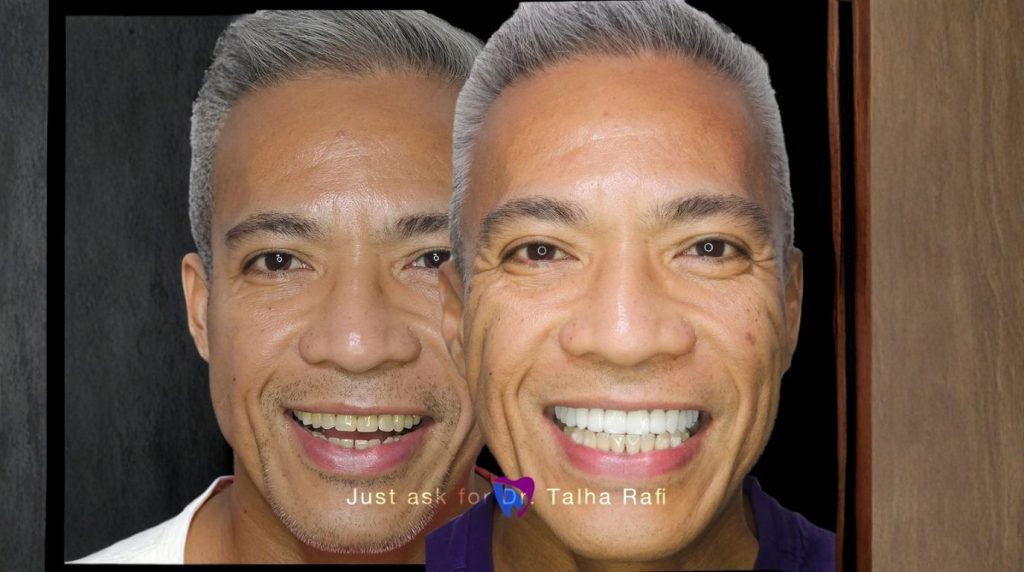
A radiant smile can give your confidence an immediate boost & help you make a great first impression, and make social or work situations feel easier. Many patients want to know: how long does teeth whitening last? The answer depends on factors such as your daily habits, how you care for your teeth, and which whitening method you use.
At Dr. Talha Mohammed Deliwala, you get cosmetic dental care that looks natural and lasts. If you are thinking about whitening your teeth for a special occasion or just want to brighten your smile, knowing how to keep your results can help you enjoy whiter teeth for longer.
How long does teeth whitening last?
One of the most common questions patients ask is, teeth whitening lasts how long ? The answer depends on the whitening treatment used, the type of stains, and your daily habits.
Whitening treatments can help reduce discolouration, but they do not prevent future stains. If you keep your mouth clean and avoid staining foods and drinks, your teeth whitening results will last longer.
What affects teeth whitening results?
Several everyday habits and lifestyle factors can affect the longevity of your teeth whitening results, including your diet and the condition of your enamel. Some people naturally maintain a brighter smile for longer due to better oral care and fewer stain-causing habits.
1. Food and Drink Choices
Eating and drinking dark-colored foods and drinks is one of the main reasons teeth whitening fades over time.
Common culprits include:
- Coffee
- Tea
- Red wine
- Cola
- Curry
- Tomato-based sauces
- Berries
The natural colouring agents in these foods and beverages can contribute to tooth enamel staining over time.
2. Smoking and Tobacco Use
Smoking makes whitening results fade much faster. Nicotine and tar cause yellow and brown stains that can quickly undo the effects of whitening.
3. Oral Hygiene Habits
Regular brushing, flossing, and professional dental cleanings help prolong the results of teeth whitening. Poor oral hygiene allows plaque and stains to build up faster.
4. Whitening Treatment Options
Not all whitening methods work the same way. Treatments performed by a dentist usually give you whiter, more even results than products you use at home.
How to make teeth whitening last longer
If you have invested in a brighter smile, naturally, you want to maximise your results. Fortunately, there are several simple ways to help extend the life of your whitening treatment.
You can follow these tips for longer-lasting results
- During the first 24 to 48 hours post-whitening, teeth can absorb stains more easily, so avoid foods and drinks that may discolour enamel and use a straw for dark beverages.
- If you drink coffee or iced tea, using a straw can help reduce contact with your teeth.
- Brush and floss consistently
- Maintaining good oral hygiene is one of the simplest ways to protect your teeth whitening results.
- Schedule Regular Dental Cleanings
- Professional dental cleanings can remove surface stains before they become more difficult to remove.
- Consider Touch-Up Treatments
- Getting touch-up whitening treatments from time to time can help keep your smile bright, especially if you often eat or drink things that stain your teeth.
Signs it may be time for a Whitening touch-up
Even the best whitening treatment is not permanent. You may benefit from a touch-up if you notice:
- Yellowing returning gradually
- Uneven tooth color
- Dullness in your smile
- Staining around edges of teeth
If you are asking yourself again, how long does teeth whitening last, it may simply be time for a maintenance session.
Who is suitable for composite bonding?
Composite bonding may be suitable for patients who:
- Have healthy teeth and gums
- Want to improve minor cosmetic imperfections
- Have small chips or cracks
- Want to close minor gaps
- Want to improve their tooth shape
- Prefer minimally invasive cosmetic dentistry.
A professional consultation with Mr Deliwala will help you determine whether cosmetic bonding is a suitable option for your smile goals.
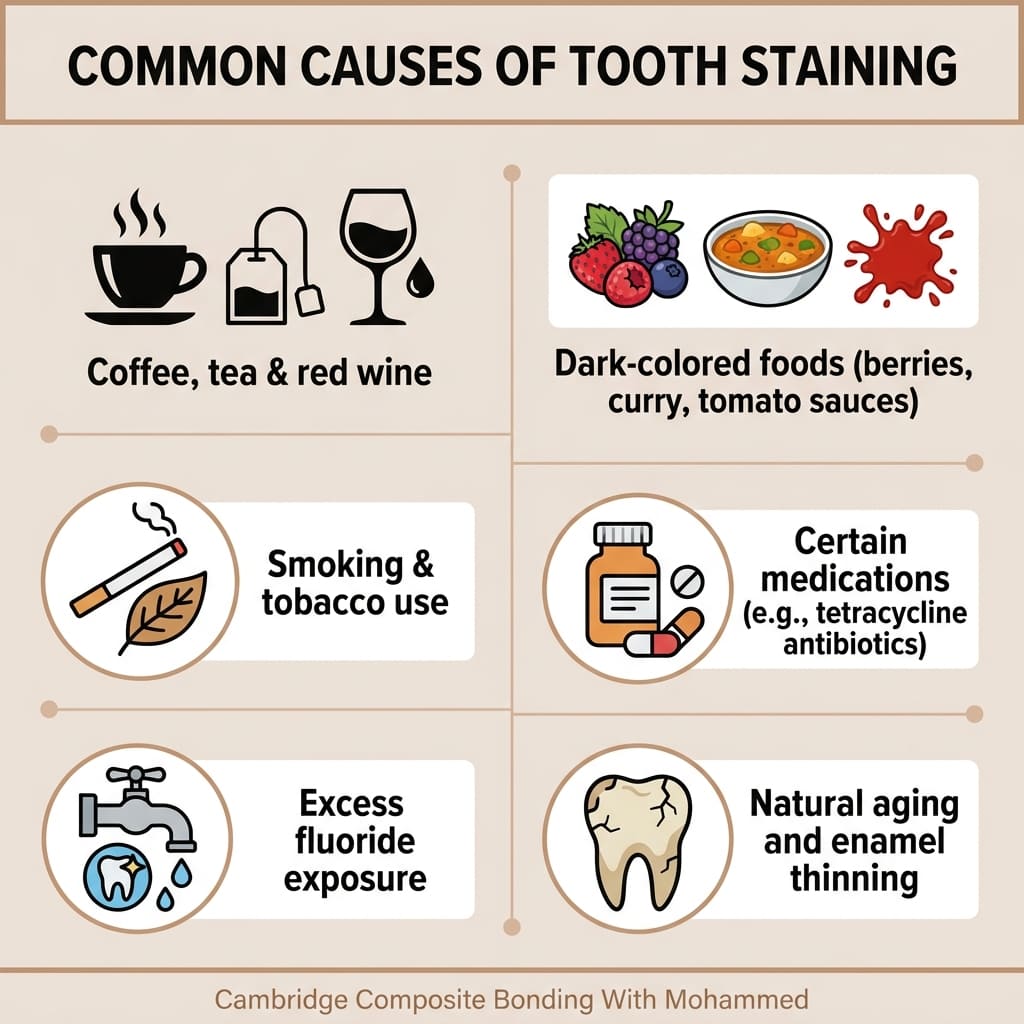
What causes teeth to stain?
Tooth discoloration can happen gradually over time or appear more quickly due to certain habits and health factors. While some stains affect only the surface of the teeth, others develop deeper within the enamel. Understanding the cause of discoloration can help patients choose the right whitening treatment and maintain longer-lasting teeth whitening results.
Some of the most common causes of stained teeth include:
- Consistent consumption of coffee, tea, and red wine.
- Dark-colored foods such as berries, tomato sauces, and curry
- Smoking or tobacco use
- Certain medications, including tetracycline antibiotics
- Excessive fluoride exposure, which may lead to white mottled spots
- Natural aging, which causes enamel to thin and reveal darker dentin underneath
No matter the cause, professional whitening treatments offered by Dr. Talha Mohammed Deliwala can help restore a brighter, healthier-looking smile safely and effectively.
Can teeth whitening damage your teeth?
This is another common concern among patients exploring cosmetic dentistry.
When performed correctly under professional supervision, teeth whitening is considered safe for most healthy adults. Temporary tooth sensitivity may occur, but it usually resolves within a few days.
Cosmetic dentists take the time to check several important factors before starting any treatment.
- They look at any dental work you already have, like fillings or crowns,
- ask about any tooth sensitivity,
- check the health of your gums,
- and examine the condition of your enamel.
All of this helps make sure your treatment is both safe and effective.
Why professional whitening delivers better long-term results
One reason patients choose professional cosmetic dental care is consistency. Store-bought kits may produce uneven shades or limited improvement, while professional systems are designed for predictable and longer-lasting whitening.
At Dr. Talha Mohammed Deliwala, patients benefit from individualized cosmetic solutions focused on achieving natural-looking smiles rather than overly artificial brightness.
A professionally guided whitening plan can also help reduce sensitivity and improve overall comfort during treatment.
Side effects of teeth whitening
Teeth whitening is usually safe when done properly, especially with a professional’s help. Still, some people might notice short-term side effects. Possible side effects include:
1. Tooth Sensitivity
Using whitening products may cause brief sensitivity to hot and cold foods and beverages. This sensitivity usually goes away after a few days.
2. Gum Irritation
If trays do not fit well or too much whitening gel is used, your gums might get irritated. Seeing a professional can help lower this risk.
3. Temporary Gum Whitening
In some cases, whitening agents may temporarily lighten the gum tissue. The normal color usually returns quickly.
4. Mild Stomach Irritation
If you accidentally swallow whitening products, you might feel some mild discomfort in your throat or stomach.
5. Enamel Concerns
Excessive use of abrasive or high-strength whitening products may contribute to enamel thinning over time. This is why professional supervision is recommended for safer, longer-lasting outcomes.
If you experience severe pain, burning, or prolonged sensitivity after whitening, it is important to contact your dentist promptly.
Get the smile you deserve with the right dental care
Understanding how long does teeth whitening last supports patients in making confident, informed decisions about dental treatments. While whitening is not permanent, professional treatment combined with good oral habits can keep your smile brighter for years.
Whether you are preparing for a special event or simply want a confidence boost, Dr. Talha Mohammed Deliwala provides personalized cosmetic dentistry solutions, including guidance on teeth whitening last how long and what to expect from your results.
Book your consultation today and see how professional teeth whitening can give you a brighter, natural-looking smile that lasts.

About the author
Mr Mohammed Talha Deliwala
BDS – Rajiv Gandhi University of Health Sciences
13+ Years Experience
3 Countries Practice Experience
GDC Registered Dental Therapist (UK)
Former Medical Director, Dubai
Expert in Cosmetic & Preventive Dentistry
Mr Mohammed Talha Deliwala is a UK-based dental therapist with over 13 years of clinical experience across India, the UAE, and the United Kingdom. He holds a Bachelor of Dental Surgery (BDS) from Rajiv Gandhi University of Health Sciences and specializes in preventive, restorative, and cosmetic dentistry, including teeth whitening, composite bonding, and periodontal therapy. Known for his patient-focused approach, he is committed to delivering comfortable, evidence-based dental care that promotes long-term oral health and confident smiles.
FAQs
The results of professional whitening can last 1 to 3 years, depending on oral hygiene, diet, and lifestyle, with longer-lasting effects achieved by avoiding smoking and staining foods.
If you drink coffee every day, your whitening results might not last as long. Getting regular dental cleanings and occasional touch-ups can help keep your smile bright.
To keep your teeth white, brush twice a day, floss, try to limit dark drinks, and see your dentist regularly for cleanings and checkups.
Yes. Professional whitening treatments reach deeper stains and usually give you whiter teeth that last longer than whitening toothpaste alone.
In many cases, yes. A cosmetic dentist can adjust the treatment to help protect sensitive teeth and make you more comfortable.