
The Complete Guide to Composite Bonding: Costs, Benefits, Procedure & Aftercare

Are you covering your mouth while laughing or hiding your smile in photos? Even minor dental imperfections, such as a small chip, a nagging gap, or persistent discolouration can take a significant toll on your self-confidence.
If you have been researching ways to improve your smile without lengthy or invasive treatments, composite bonding is the solution.
Mr Mohammed Talha Deliwala, a GDC-registered Dental Therapist with over 13 years of clinical experience specialises in delivering bespoke composite bonding treatments that look natural, feel comfortable, and are long-lasting.
In this guide, we’ll explore what is composite bonding, understand the benefits of composite bonding, and break down the procedure to make an informed decision about your dental health.
What is composite bonding?
Composite bonding – The art of smile refinement
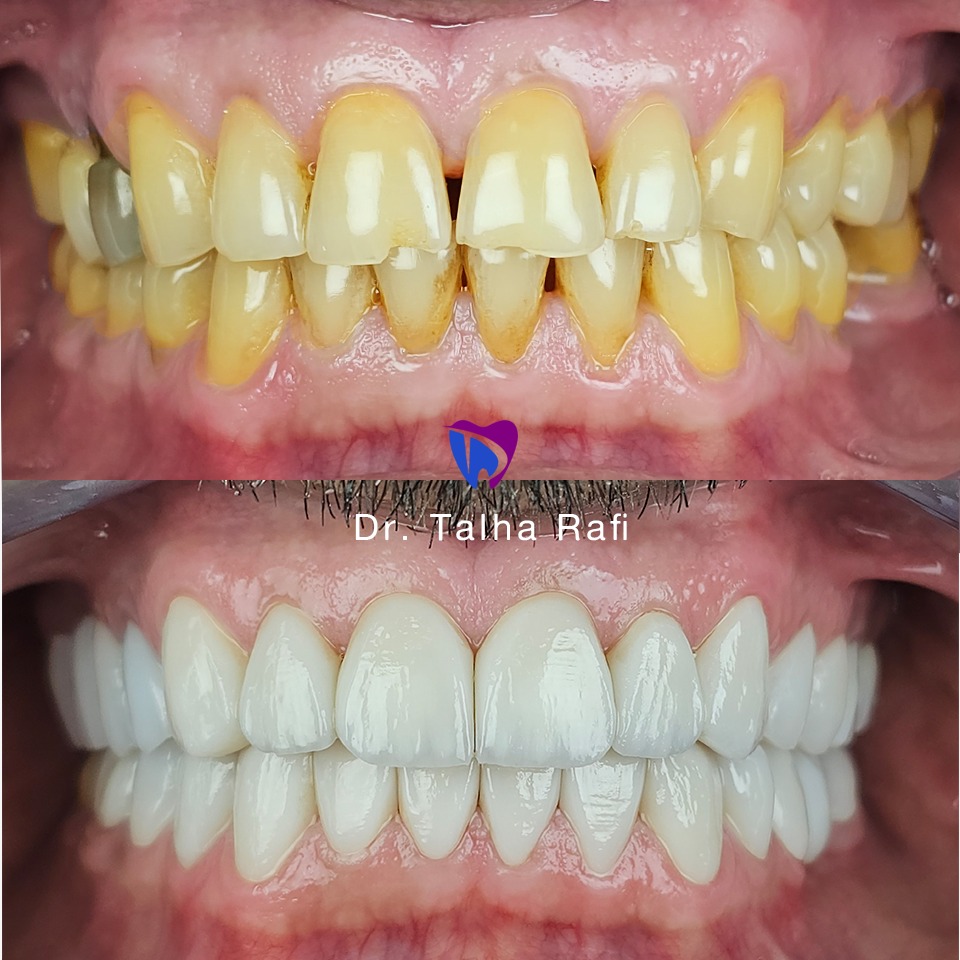
Composite bonding is a cosmetic dental procedure that uses tooth-coloured composite resin to improve the appearance of teeth.
The resin is carefully sculpted, shaped, and polished directly onto the tooth surface to enhance the smile while preserving as much natural tooth structure as possible.
The result? Teeth that look smoother, more even, and more aesthetically balanced, often in a single appointment.
For patients wondering what is composite bonding suitable for, the answer is simple: it is ideal for people seeking subtle yet effective smile improvements without extensive dental work.
What can composite bonding fix?
Composite bonding is a versatile treatment. Mr Mohammed Talha Deliwala uses it to address a wide range of aesthetic concerns, including:
- Chipped or cracked teeth – restoring the original shape quickly and effectively
- Gaps between teeth – closing midline gaps or diastemas without orthodontic treatment
- Uneven or misshapen teeth – improving symmetry and proportion
- Worn or short teeth – rebuilding lost tooth structure
- Discoloured or stained teeth – covering intrinsic stains that whitening can’t address
- Minor misalignment – creating the illusion of straighter teeth
Why composite bonding has become so popular?
The popularity of composite bonding has increased significantly over recent years because patients are looking for cosmetic treatments that are:
Conservative | Affordable | Quick | Natural-looking | Minimally invasive |
Many people also appreciate that the procedure can deliver immediate results. In many cases, patients walk into the clinic and leave the same day with a noticeably improved smile.
Mr Deliwala’s treatment plans are carefully tailored to ensure the final result complements the patient’s natural facial features rather than creating an artificial or overly bright appearance.
What are the benefits of composite bonding?
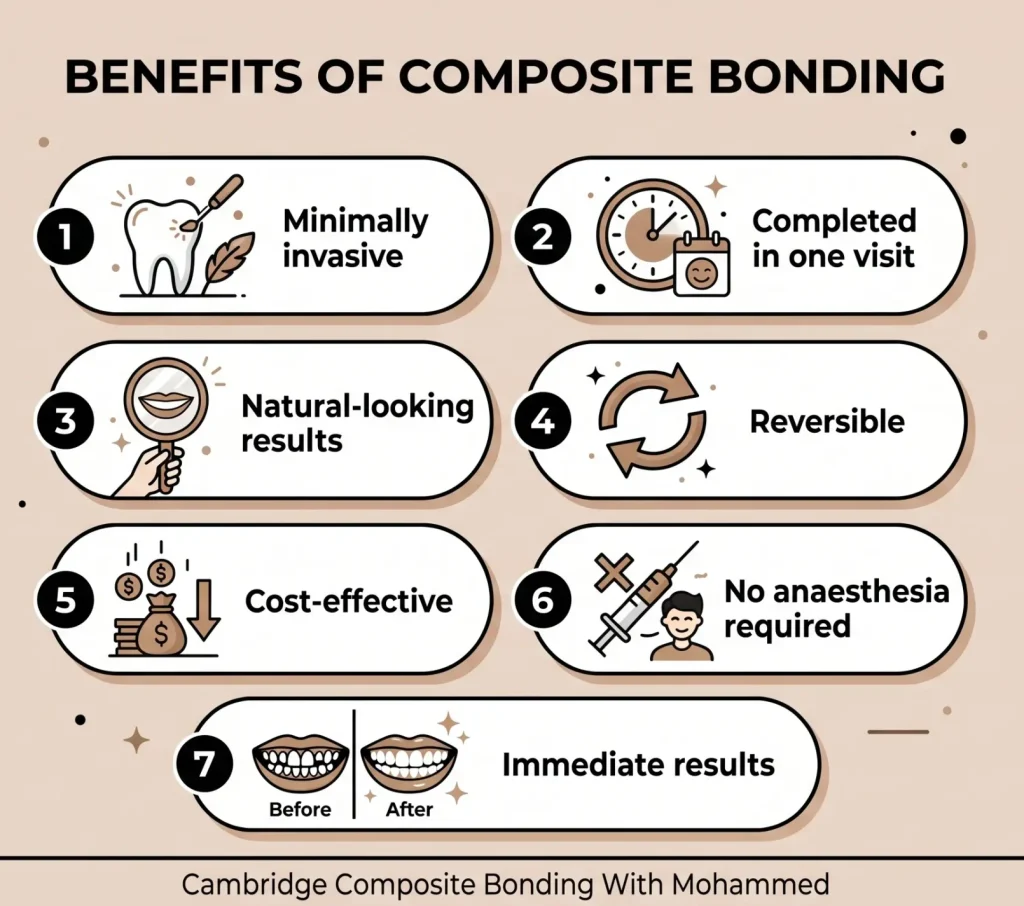
Here are the key benefits of composite bonding that patients consistently value:
- Minimally invasive – in most cases, your natural tooth is preserved with little to no removal of tooth enamel.
- Completed in one visit – the entire composite bonding procedure is typically carried out in a single appointment.
- Natural-looking results – the resin is carefully colour-matched to blend with your surrounding teeth.
- Reversible – unlike veneers, composite bonding can be adjusted or removed if needed.
- Cost-effective – significantly more affordable than porcelain veneers or other cosmetic alternatives
- No anaesthesia required – the treatment is painless in most cases
- Immediate results – you walk in with a concern and walk out with a transformed smile
Composite bonding is a treatment that genuinely works for a broad range of patients, from those with a single chip to those looking for a complete smile makeover.
Who is suitable for composite bonding?
Composite bonding may be suitable for patients who:
- Have healthy teeth and gums
- Want to improve minor cosmetic imperfections
- Have small chips or cracks
- Want to close minor gaps
- Want to improve their tooth shape
- Prefer minimally invasive cosmetic dentistry.
A professional consultation with Mr Deliwala will help you determine whether cosmetic bonding is a suitable option for your smile goals.
The composite bonding procedure - What to expect?
Many patients researching the composite bonding procedure want to know what actually happens during treatment. The process is usually straightforward and comfortable.
Here’s what to expect when you visit Mr Mohammed Talha Deliwala in Cambridge:
Step 1 – Initial consultation
Your consultation starts with a detailed smile assessment. Mr Deliwala takes the time to understand your aesthetic goals, examine your teeth, and discuss which treatment option is right for you.
Step 2 – Smile design
For multi-tooth treatments, digital smile design is used to plan the precise aesthetic outcome. This takes into account your facial features, smile line, and individual tooth proportions, ensuring results that look natural.
Step 3 – Tooth preparation
In most cases, minimal preparation is needed. The tooth surface is gently cleaned and conditioned to help the resin bond securely.
Step 4: Composite Application & Sculpting
The resin is applied in layers, sculpted by hand to achieve the desired shape and contour. This is where the skill and artistry of a dental professional make a difference, and it’s an area where Mr Deliwala’s 13+ years of experience truly show.
Step 5: Curing & Polishing
A curing light hardens the material fast and firmly within seconds. After that, the tooth is polished to seamlessly match the rest of your smile.
Step 6: Review & Follow-Up
After treatment, you’ll receive aftercare guidance and a follow-up check to ensure your results are settling well.
The entire composite bonding procedure typically takes between one and two hours, depending on how many teeth are being treated.
How much is composite bonding in the UK?
The answer varies depending on several factors, including:
- Number of teeth treated
- Complexity of the case
- Experience of the cosmetic dentist
- Materials used
- Whether additional treatments are needed
Mr Mohammed Talha Deliwala offers clearly structured packages, so you know exactly what you’re getting before you commit.
Here’s an overview:
Package | Teeth Treated | Price From |
Minor Enhancement | 2 teeth (central incisors) | £525 |
Smile Enhancement | 4 teeth | £995 |
The Social Six (Most Popular) | 6 teeth | £1,495 |
Complete Smile Makeover | 8 teeth | £1,995 |
The Social Six package – covering the six most visible teeth- includes digital smile design and teeth whitening, making it the most comprehensive and popular choice.
Get to know the exact pricing details here.
When people ask how much is composite bonding UK-wide, prices tend to range from around £150 to £400 per tooth, based on the clinic and location.
*Mr Deliwala’s package-based pricing offers excellent value without compromising on quality or results. Interest-free finance is also available. The final cost estimate depends on the clinical complexity and personalised consultation.
How long does composite bonding last?
Composite bonding is durable but not permanent. On average, bonding can last 5 to 7 years with proper maintenance and regular dental care.
Longevity depends on several factors, including:
- Maintaining good oral hygiene
- Following a balanced diet and lifestyle
- Avoid smoking
- Ensure regular dental maintenance
Composite Bonding Aftercare: How to Maintain Your Smile?
Proper composite bonding aftercare is essential for preserving both the appearance and lifespan of the treatment.
- Maintain excellent oral hygiene: Brush twice daily and floss regularly
- Avoid excessive staining foods and drinks: Reduce the consumption of coffee, tea, and red wine. Smoking can stain composite resin over time.
- Do not bite hard objects: Avoid biting fingernails, pens, ice, or hard sweets as this can chip the bonding material.
- Attend regular dental check-ups: Routine appointments allow Mr Deliwala to evaluate the bonding and, if needed, professionally polish the teeth.
- Wear a night guard if recommended: Prefer a night guard if you have a habit of grinding teeth during sleep to reduce pressure on bonded teeth.
Following proper composite bonding aftercare helps maintain a healthy, polished, and natural-looking smile for years to come.
Smile with confidence at composite bonding Cambridge - Expert results, one visit at a time.
If you’ve been putting off improving your smile, this is your sign to start. Composite bonding is quick, comfortable, and in the right hands genuinely transformative.
Mr Mohammed Talha Deliwala combines over 13 years of clinical expertise with a meticulous, patient-focused approach to deliver results that feel as good as they look.
With transparent pricing, interest-free finance options, and a free WhatsApp smile assessment available, there’s never been an easier time to take that first step.
Are you ready to stop hiding and start smiling? Book your consultation with a smile expert today.

About the author
Mr Mohammed Talha Deliwala
BDS – Rajiv Gandhi University of Health Sciences
13+ Years Experience
3 Countries Practice Experience
GDC Registered Dental Therapist (UK)
Former Medical Director, Dubai
Expert in Cosmetic & Preventive Dentistry
Mr Mohammed Talha Deliwala is a UK-based dental therapist with over 13 years of clinical experience across India, the UAE, and the United Kingdom. He holds a Bachelor of Dental Surgery (BDS) from Rajiv Gandhi University of Health Sciences and specializes in preventive, restorative, and cosmetic dentistry, including teeth whitening, composite bonding, and periodontal therapy. Known for his patient-focused approach, he is committed to delivering comfortable, evidence-based dental care that promotes long-term oral health and confident smiles.
FAQs
No. The procedure is painless and usually does not require injections or anaesthetic.
Yes, composite resin can stain over time, especially with smoking and frequent consumption of staining foods or drinks.
Composite bonding is not permanent, but it is long-lasting with proper care.
It can improve the appearance of minor misalignment, but severe orthodontic issues may require Invisalign or braces.
The cost varies depending on the number of teeth treated and the complexity of the case. A personalised consultation is the best way to receive an accurate quote.